
MENU


Karl Vaters (Author of "Small Church Essentials") is a current voice, speaking wisely to pastors of small (aka "normal") churches. Since a very, very large percentage of churches fall into this category, it stands to reason that the pastors of such churches are normal pastors. It's not at all unusual to be a normal pastor of a normal sized church. The challenge is to be the best kind of church that Jesus can make the church to be. And the best kind of pastor. Karl Vaters has helped the cause of the kingdom of God greatly with his three books: The Grasshopper Myth: Big Churches, Small Churches and the Small Thinking that Divides Us, Small Church Essentials: Field-Tested Principles for Leading a Healthy Congregation of Under 250, and 100 Days to a Healthier Church: A Step-By-Step Guide for Pastors and Leadership Teams. Show host Bill Holdridge interviews Karl, with a helpful focus for pastors re: how to navigate the current Covid-19 crisis and beyond.
Pastor Alan Stoddard wrote his doctoral thesis for Gordon Conwell Theological Seminary on the subject of sermon based small groups. That thesis eventually became a book, entitled Groups that Revitalize: Bringing New Life to Your Church through Sermon-Based Small Groups, co-authored with Kenneth Priest. Alan is passionate about the amazing discipleship opportunities doing sermon based small groups provides for any church ... especially for churches that are committed to expositional Bible teaching. This podcast presents the case for sermon based groups, as an effective way to kill several birds with one stone. Biblical fellowship can be a result, along with a much deeper dive into Sunday's teaching. This will enliven the Sunday morning pulpit experience, giving it an even greater sense of purpose in the heart of the pastor-teacher. Alan is also passionate about church revitalization. Sermon based small groups can play a major role in that happening as well.
Pastor Ken Merrihew is the founding and longtime pastor of Calvary Chapel Oklahoma City. He is a leader, a friend to pastors, and a source of godly wisdom to his peers in ministry. In this podcast, Pastor Ken shares with us his thoughts about the advantages and strengths of a small (or normal) sized church. This is necessary encouragement for the majority of pastors serving in the U.S. today.

Does anybody even practice what we call church discipline anymore? And if a church does practice church discipline, why do they do it? How do they do it? What is its purpose? Show host and Poimen Ministries Director Bill Holdridge draws from the scriptures, coupled with his experience in pastoral ministry, to make suggestions to pastors about the whys and how's of church disciple. For instance, Bill calls us these principles in mind: Church discipline is closely related to Christian discipleship. If the church discipline process requires separation from the body, the goal of the excommunication is restoration. Church discipline is actually an application of Divine chastening. To be a Great Commission church, the church must exercise church discipline with its many forms and applications. To be a holy church, the church must practice church disciple. To develop mature believers, the church must trust Jesus to assist Him as He perfects His people. One tool He uses is church discipline. This podcast is aimed at helping pastors and churches do this better, with grace and truth applied at the same time. BULLET POINT #1- Church discipline is closely related to Christian discipleship. Discipline and discipleship are part of the same idea. Discipleship could also be called preventative church discipline. When congregants are discipled, they are not candidates for church discipline. A person who is in the Word, in prayer, in fellowship, who exercises his/her spiritual gifts for others’ sake, who is involved in the Great Commission, who is accountable, etc. has made himself immune to the need for corrective church discipline. BULLET POINT #2- Church discipline is actually an application of Divine chastening. (Hebrews 12:6-8) BULLET POINT #3- Matthew 18:15-18 has to do with interpersonal conflicts. Against you is not found in Codex Vaticanus, Codex Sinaiticus do not contain these words, but the Majority text does. (https://credohouse.org/blog/textual-problem-study-matthew-1815) BULLET POINT #4- The number of people who are made aware of the discipline is determined by the number of people who know the ones being disciplined. BULLET POINT #5- If the church discipline process requires separation from the body, the goal of the excommunication is restoration. Restoration to God, first. Then to other believers, second. (Galatians 6:1) BULLET POINT #6- Authority to exercise church disciple comes directly from the Lord Jesus Christ. (Matthew 28:18-20) BULLET POINT #7- Conditions must be clear for the disciplined person’s return into full fellowship. BULLET POINT #8- The church governing documents (Bylaws) and board minutes must be consistent with the Bible’s teaching on church discipline, and internally consistent with BOD minutes or elder’s meeting minutes. BULLET POINT #9- Effective church discipline requires a deep team of leaders that are all-in, and who understand how church discipline should be practiced, Biblically.
Do you want to discover or maybe even reignite the small groups ministry of your church? Troy Drake is the founding pastor of Calvary Chapel Meridian, Idaho, having served as its pastor since 2009, and has led their church into this important area of discipleship ministry. Here's a quote from the church website: "Now all who believed were together, and had all things in common, so continuing daily with one accord in the temple, and breaking bread from house to house, they ate their food with gladness and simplicity of heart, praising God and having favor with all the people. And the Lord added to the church daily those who were being saved." (Acts 2:46-47) "The early disciples understood that togetherness is essential for the growth of each person and the church itself by being in close community with other believers. The Christian life is way better in community! And yet, this is the one area that is often lacking in the lives of Christians. "We must intentionally 'do life' together. Rather than just hoping that it will happen, we have chosen to set up a purposeful way for the people in our fellowship to engage with each other. We call them House2House Groups. "What can you expect at an H2H Group? Each group has a meal together, they discuss & apply Sunday’s sermon, and support each other in prayer and practical ways as they seek to join in God’s mission." So tune in, and get some fresh ideas that may trigger fresh vision that will help your fellowship do the one anothers of the New Testament.

Pastor Alan Stoddard wrote his doctoral thesis for Gordon Conwell Theological Seminary on the subject of sermon based small groups. That thesis eventually became a book, entitled Groups that Revitalize: Bringing New Life to Your Church through Sermon-Based Small Groups, co-authored with Kenneth Priest. Alan is passionate about the amazing discipleship opportunities doing sermon based small groups provides for any church ... especially for churches that are committed to expositional Bible teaching. He shares with us his discoveries and methods in truly making authentic disciples according to the bible. In today's podcast, we will find useful ideas and resources to reach people for eternity.

Today we’ll be talking with Ed Taylor of Calvary Aurora, Colorado on the subject of leadership … Biblical leadership in the role of senior/lead pastor. I’m sure most, if not all of our listeners know of Ed Taylor … he’s the senior/lead pastor of Calvary Church in Aurora, CO. He was saved at Calvary Chapel Downey, grew in the Word and in ministry there for 8 years, and then in 1999 moved to the Denver area with a desire to plant a church. In December of 1999 Calvary Church held its first service, and has been growing deep and wide ever since. Ed is the author of the book Ordinary Servant, the host of the Lead2Serve Podcast, and the Bible Teacher of the national radio broadcast “Abounding Grace.” In this podcast, Ed will be sharing about: What is Biblical leadership? What does it mean to lead as a senior/lead pastor? How does leading a church differ from leading in the corporate world, or in a business? What is the biggest leadership lesson you've learned in your years of ministry? What is the number one leadership challenge senior/lead pastors are facing today? What's the number one thing that pastors can do, that maybe they're not doing so well right now? Join us for this excellent discussion!
Spoiler Alert: this is much more than a dialogue on church polity. It has to do more with the way a pastor leads, the way he works with his fellow leaders. This stuff is GOLDEN! When Pastor David Guzik was pastoring in Simi Valley, CA, he delivered a message on the subject of church government. In that message, he acknowledged the three major forms of church government and then argued for the validity of a pastor led form of church government. The message was entitled "Church Government: Jesus Style and Moses Style." It's available in audio format here: https://enduringword.com/media/church-government-jesus-style-and-moses-style/. In this podcast, David discusses with show host Bill Holdridge the subject of pastoral leadership some of the challenges and necessities of leading well.

Calvary Chapel Pastor Tadd Scheffer shares his incredible testimony of stopping his process of ordination into the Reformed Church just weeks from official recognition. A miraculous turn of events turned his life and ministry direction a full 180˚ the other way.
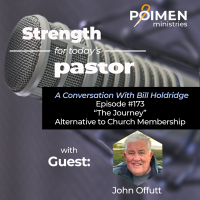
Pastor John Offutt speaks about the overall onboarding process the church has developed to help accomplish its mission. The process is called The Journey, a super innovative approach to the member vs. non-member conundrum faced by many churches